

The Invisible Leader Problem – You Can No Longer Afford to Lead from the Shadows
By JON KELLY
An industry in transition demands leaders who are willing to be seen.
For generations the construction industry ran on a simple and reliable formula: do excellent work, build trusted relationships and let the projects speak for themselves.
The best firms were often led by founders and executives who were deeply private – known inside their networks, invisible to everyone else.
That model built empires. It also built a cultural norm that equates keeping a low profile with professionalism, and visibility with self-promotion.
That norm is now a liability.
The Ground Has Shifted
The forces reshaping construction are not subtle. Labor shortages have made talent acquisition a competitive sport, and the best candidates – especially those entering the trades or project management from younger generations – research company culture and leadership before they ever submit a resume.
Private equity and institutional capital, now deeply embedded in the construction sector, conduct leadership due diligence as rigorously as financial audits.
Strategic partners and subcontractors vet firms digitally before they ever pick up the phone.
Add to this the rise of what might be called the digital trust economy – a market environment in which credibility is built in public, over time, through consistent and visible proof of expertise, values and vision.
In this economy a company without a recognizable human voice at the helm is not seen as humble. It is seen as opaque. And opacity, in a world where stakeholders can find out almost anything about anyone in seconds, reads as a red flag.
“In the digital trust economy, invisibility is not humility – it is a signal the market reads as risk.”
The Trust Architecture Has Changed
Construction has always been a relationship business.
What has changed is where relationships begin. They no longer start at a trade show, over a handshake or through a mutual introduction from a trusted colleague – though all that still matters.
They begin with a search. A LinkedIn profile. A podcast appearance. A bylined article. A short-form video explaining how your firm approaches a complex challenge.
The CEO or founder who is absent from these channels has not avoided the marketplace of opinion. He or she simply left their seat at the table empty – and someone else, or something else has filled it. What fills it may be a competitor’s narrative, a disgruntled former employee’s review or simply silence.
None of these build trust.
None of these attract the caliber of talent, clients or capital that a growing firm requires.
The companies gaining ground right now aren’t necessarily the biggest or the best but are the ones with leaders who can articulate a clear point of view about where the industry is headed, what their firm stands for and why that matters to the people they want to reach.
Visibility Is Not Vanity
This is the reframe that matters most for construction leaders who are resistant to stepping into a more public role: visibility, done with authenticity and intention, is not self-promotion. It is a form of organizational accountability.
When a CEO or founder puts his or her name and perspective on the record he or she is telling the market something important. I believe in this enough to be responsible for it. I am accessible. I have a point of view.
That signal – the willingness to seen and therefore held accountable – is precisely what builds the kind of trust that referrals alone cannot manufacture at scale.
The most effective construction leaders emerging today are not those that are trying to build a personal brand in the influencer sense. They are the ones who have recognized that their voice is an organizational asset.
That when they speak publicly about craft, culture, innovation or the future of the built environment, they are not promoting themselves – they are building the connective tissue between their company and the market it serves.
The Competitive Advantage of Showing Up
Here is the opportunity buried inside the discomfort: most construction CEOs and founders are still sitting this out. The field is not crowded with visible, articulate leaders who can speak to the intersection of craft, culture and commerce. Which means that the leader who chooses to show up consistently, authentically and with something substantive to say operates in a largely uncontested space.
It doesn’t require a media empire, or a social media machine. It requires a point of view and a willingness to share it in forums where it matters, and the discipline to show up regularly enough that the market begins to associate your voice with a specific kind of thinking and a specific kind of company.
It starts with a simple question that every construction CEO and founder should be asking right now: “When the right client, the right hire the right strategic partner goes looking for a leader in this space, will they find me, or will they find someone else?”
Bottom Line
The construction industry is in a period of genuine transformation. The external forces driving that transformation – shifting workforce dynamics, digital due diligence, the rise of ecosystem-based business models and the collapse of information asymmetry – are not going away. They are accelerating.
The window for first-mover advantage in visible construction leadership is open. It will not stay that way.
Jon Kelly is the owner of Kelly Construction Group, LLC.

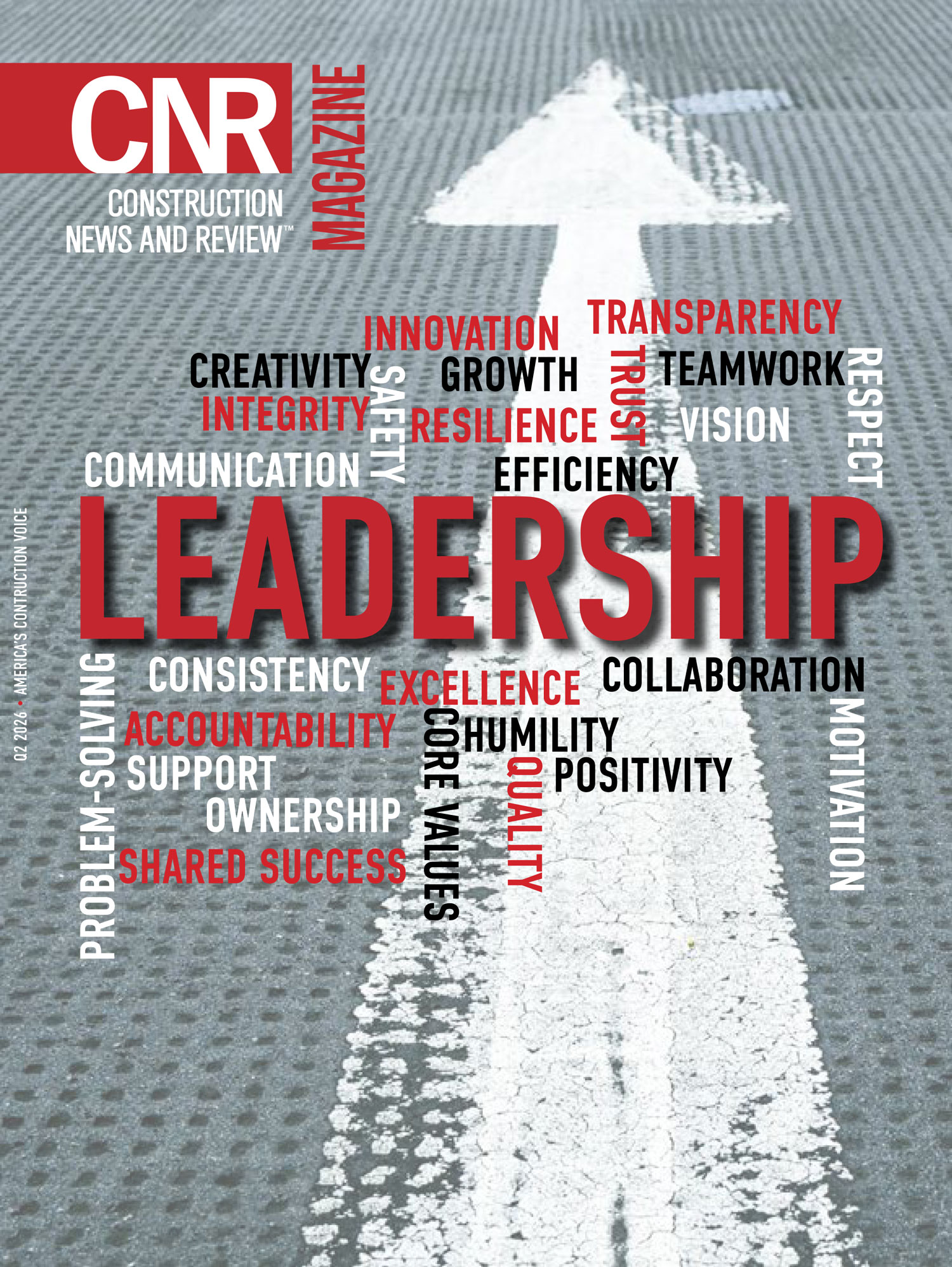
View Our Latest Print Edition
Fresh Content
Direct to Your Inbox