
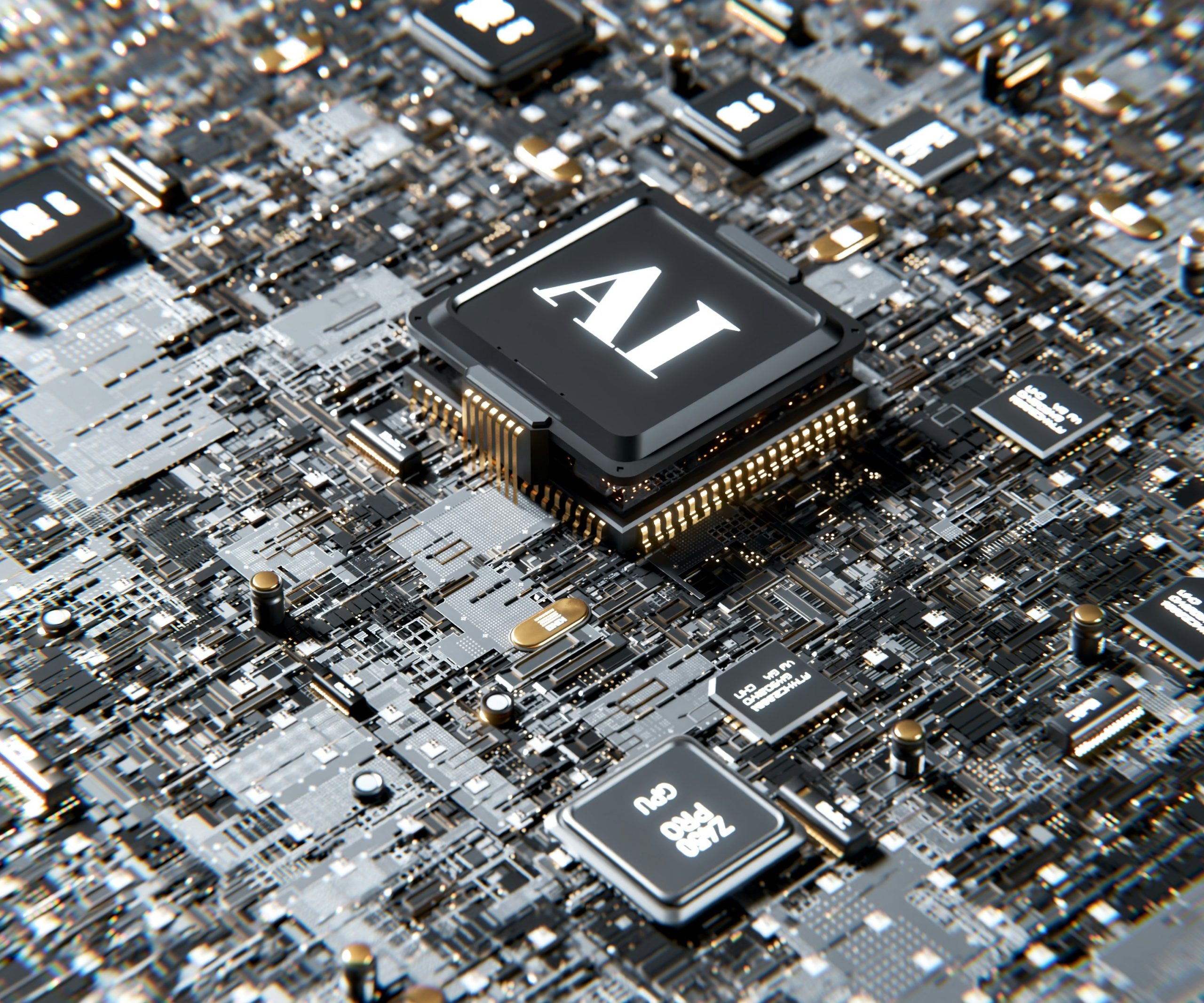
From Hard Hats to High-Tech: The AI Takeover of Construction
By DERYCK STIDHAM
Imagine a dusty construction site, the air thick with the scent of concrete and steel, juxtaposed against sleek, futuristic robots diligently laying bricks with laser precision.
The construction industry, often perceived as a realm of brute force and repetitive tasks, is undergoing a dramatic metamorphosis. Artificial intelligence is no longer a futuristic fantasy; it’s actively infiltrating every facet of construction – from the initial strokes on a blueprint to the final, triumphant touches on a skyscraper. AI isn’t merely a fancy tool in this arena; it’s fundamentally reshaping how we conceive, design and execute the very structures that define our world.
Back to the Future: A (Surprisingly Long) History of Smart Building
The notion of intelligent machines has captivated thinkers for decades. The Turing Test, conceived in 1950, laid the groundwork for evaluating machine intelligence, and early chatbots hinted at the potential for computers to engage in human-like interaction. But when did this abstract concept begin to concretize (pun intended) within the traditionally analog world of construction?
The industry’s initial foray into the digital realm can be traced back to the 1960s with the advent of Computer-Aided Design (CAD). Suddenly, drafting tables became relics as pixels replaced pencils, enabling architects and engineers to visualize and manipulate designs with unprecedented precision. Computer-Aided Manufacturing (CAM) and CNC machines followed suit, automating the production of construction components and ushering in an era of enhanced efficiency.
However, the true explosion of AI in construction occurred in the 21st century, fueled by the confluence of several factors. The exponential growth in computing power, the accumulation of vast datasets and the development of sophisticated algorithms coalesced to create a perfect storm. Drones began to survey sites from above, design automation tools streamlined the planning process and predictive maintenance systems anticipated equipment failures before they even occurred. This marked the ascent of AI from a nascent technology to a transformative force within the industry.
See them from drudgery and create new, more skilled roles? The answer likely lies somewhere in between, necessitating proactive efforts to reskill and upskill the workforce.
Data, Data Everywhere, But is it Clean?
The effectiveness of AI hinges on the availability of high-quality, reliable data. However, the construction industry often grapples with fragmented and inconsistent data sources. Furthermore, the collection and use of data raise critical questions about privacy, security and potential bias.
Who’s to blame? The increasing reliance on AI in construction raises complex legal and ethical questions. Who is liable when an AI system makes an error that results in damages or injuries? Is it the programmer, the contractor or the AI itself? The “black box” nature of some AI algorithms further complicates matters, making it difficult to understand how a particular decision was reached.
Old Habits Die Hard: The construction industry, known for its traditional practices, can be resistant to change. Integrating new AI technologies with legacy systems can be a daunting and costly undertaking.
The Skills Gap: A shortage of skilled professionals who can program, manage and maintain AI systems poses a significant impediment to adoption. Bridging this skills gap requires investments in education and training programs tailored to the needs of the construction industry.
The Crystal Ball: What’s Next for AI on the Job Site?
Looking ahead, the role of AI in construction is poised to expand exponentially. Experts predict that up to 30 percent of construction tasks could be automated by 2026. Emerging technologies such as generative AI, digital twins and smart wearables hold immense promise for transforming the industry.
Generative AI Superpowers: AI will take on a more creative role, generating optimal designs for entire complexes, suggesting sustainable materials and customizing plans at unprecedented speeds.
Digital Twins: Virtual replicas of construction projects will allow simulations and predictive planning to mitigate risk and maximize efficiency.
Robots Unleashed: Autonomous machines will handle intricate installations, concrete pouring and other construction tasks.
Smart Wearables: Sensors and AI will integrate into helmets and vests, monitoring workers’ vital signs, detecting hazards and ensuring safer working conditions.
AI-Powered BIM: Building Information Modeling will become smarter, providing more reliable and data-driven support for project planning and clash detection.
These advancements promise to make construction safer, more sustainable and more efficient.
The Final Hammer Swing: Building a Smarter World, One AI-Powered Brick at a Time
AI is unequivocally reshaping the construction industry, bringing about significant benefits while also presenting new challenges. The future of construction is not about replacing human workers with robots but about empowering them with intelligent tools that augment their capabilities and allow them to focus on higher-level tasks. As we navigate this technological transformation, it is crucial to address the ethical, legal and societal implications of AI to ensure that its benefits are shared equitably and that its risks are mitigated effectively. Get ready for a construction world that’s faster, safer, cheaper and way, way cooler than you ever imagined.
Deryck Stidham is founder of Horizon Hub Media.

View Our Latest Print Edition

Fresh Content
Direct to Your Inbox