
By EMILY CHUNG
Taking apart and separating valuable materials allows them to be recycled and reused.
When Meredith Moore moved from New York to Toronto, she was astonished by the amount of home renovation happening in the city — and by the full construction waste bins.
Marilyn would see dumpsters just filled with wood and trim and doors and all these things that she knew were not waste, said Moore, who had once been an interior designer.
So when her family bought their own Toronto fixer-upper four years ago, she told their contractors that they wanted to save as much material as possible.
Marilyn said she was met with a slew of no’s.
But Moore didn’t want to take no for an answer. Instead, she founded Ouroboros Deconstruction, putting together a crew tasked not with demolition, but rather with deconstruction, so the materials could be reused and recycled.
Deconstruction may seem slow, inefficient and potentially costly compared to just knocking something down. But there’s growing interest from building owners and the construction industry alike in taking a more careful approach, which cuts waste and emissions by giving new life to old materials.
The problem with demolishing buildings
If you want to renovate or replace an existing building, standard practice has been demolition – breaking it apart with tools and machines, and putting the resulting rubble of mixed wood, drywall, insulation and whatever else in a bin destined for the dump.
That results in a lot of waste – four million tons nationwide. About 30 percent of the material piled up in a typical landfill is from construction, renovation and demolition. The largest fraction of that is typically wood, which decomposes into the potent greenhouse gas methane.
Demolitions happen thousands of times a year in cities like Vancouver, which is racing to replace single-family homes with multifamily units that provide more homes in the same amount of space amid housing shortages.
Many construction materials can be reused and recycled, yet they rarely are. That’s partly because the demolition process breaks up and mixes materials into a rubble that’s hard to separate into recyclable components.
Buildings and construction account for up to 37 percent of emissions worldwide. About 30 percent of those carbon emissions – called embodied carbon – come from the energy used in the production of the materials that go into the building. Replacing one building with another generates an entire building’s worth of emissions, which means that, from a climate perspective, it’s better to extend the lifetime of those materials and reuse them than discard them.
Other options: Deconstruction and repurposing
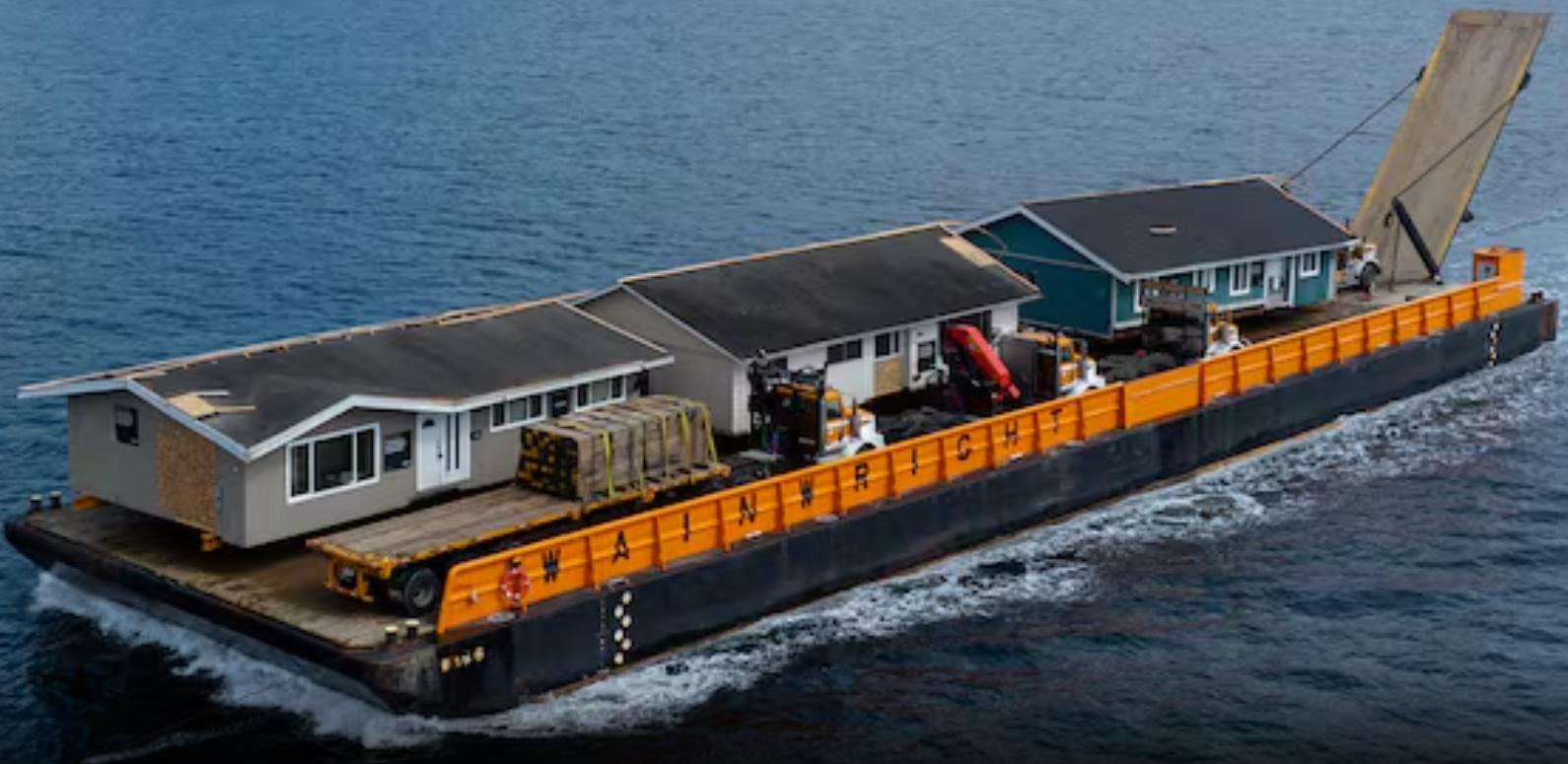
Light House is a Vancouver-based think-tank focused on “circular” construction through recycling and reuse. In a 2023 report, it estimates that about 20 percent of demolished homes could have been moved to new locations via ship to where they’re needed as is.
Another 60 per cent could have been deconstructed, and the materials salvaged for reuse and recycling.
Moore describes deconstruction as “construction in reverse, saying that it begins with the interior – removing all the finishes, salvaging doors, flooring, fixtures, appliances and then moving on to the structure. By salvaging all that lumber, she says, other materials such as asphalt shingle are also being recycled.
The concrete or stone foundation can be either recycled or reused in the new build. Moore says more than 90 per cent of the materials can be reclaimed or recycled, keeping them out of the landfill.
Her company’s latest project was a water-damaged, derelict bungalow on the west side of Toronto. Homeowners Emma and Chris Arthur thought they would have to demolish it but had guilty memories from a previous reno when everything wound up in bins headed to the dump.
This time, they vowed to do things differently. The Arthurs hired a sustainability consultant who brought up deconstruction – and they went for it.
Now Moore’s crew is taking down the wood frame piece by piece with crowbars and other handtools, then sorting the materials. Arthur says it was interesting to hear how everything would be reused. The wood beams, for example, are being turned into stools that will be upholstered with luxury fabric off-cuts.
Isn’t this slow, expensive and labour intensive?
Erick Serpas Ventura, CEO of Vema Deconstruction in Vancouver, acknowledges that traditional demolition using machinery such as excavators is shockingly fast – often in less than a day.
Deconstructing a wood frame house, on the other hand, takes a little under a week with four to six people and some machinery, often creating additional construction jobs.
To be fair, deconstructing a brick home can take longer and cost more – generally about 50 percent to 100 per cent more than the cost of demolition.
Local government incentives and bylaws, as well as sales of valuable recovered materials, could make the cost of deconstruction more competitive.
In a recent pilot project, the waste management network in Quebec’s Gaspesie Region deconstructed an industrial building in Chandler and four in Grande-Riviere, and found the cost slightly lower than the cost of demolition. The project dumped only 77 of 408 tons of material, saving tens of thousands in tipping fees and transportation costs. About 60 percent was sold to local construction projects, including a school renovation, for reuse.
Reusing materials can be challenging
There are century-old homes in Toronto and Vancouver that were built with huge beams from old growth forests that no longer exist. Putting this caliber of materials back into buildings is exciting and rewarding.
But due to existing building codes that favor new materials, it’s more challenging than it sounds. With reuse, a builder and owner have to do a lot of extra research to find materials, but then also to figure out if they can use them and how they can use them in order to be able to respect the standards and the codes.
Emily Chung covers science, the environment and climate for CBC News.

View Our Latest Print Edition

Fresh Content
Direct to Your Inbox